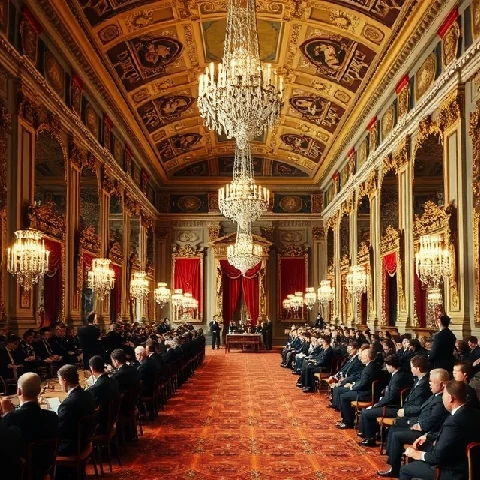
The First World War formally ended with a series of treaties; the most famous was signed in the Hall of Mirrors. The Treaty of Versailles, concluded in 1919 between the Allies and Germany, imposed territorial losses, military restrictions, and reparations on the defeated power.
German representatives had little leverage and signed under protest. The treaty redrew borders in Europe, created new states from former empires, and established the League of Nations. Critics then and later argued that its terms were either too harsh to allow stable peace or too mild to permanently weaken Germany.
Historians continue to debate its role in the interwar crisis and the origins of the Second World War. The treaty’s economic clauses, war-guilt provision, and minority arrangements all generated lasting controversy. It remains a central document for understanding the twentieth-century international order.
- 1919 peace treaty ending war with Germany
- Imposed territorial, military, and financial terms
- Created the League of Nations
- Controversial in its interwar consequences
Comments
No comments yet. Be the first to share a thought.
Leave a comment