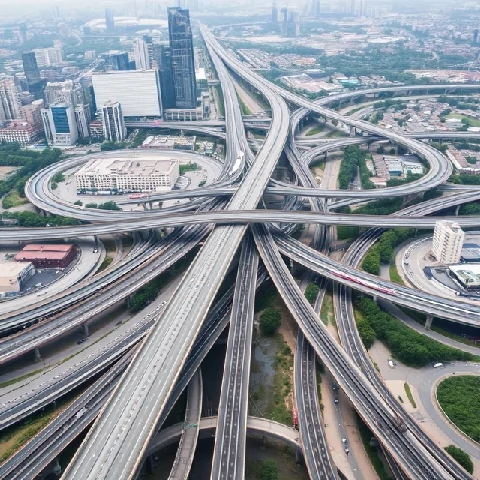
Roads, railways, ports, and airports form interconnected systems. A transportation network is the organized set of routes and terminals that moves people and goods across space. Its structure determines accessibility and shapes patterns of economic development.
Networks can be analyzed for connectivity, centrality, and vulnerability. Hubs concentrate flows; corridors channel them. Investment in transportation infrastructure has historically opened new regions and integrated markets. Congestion, maintenance backlogs, and unequal access remain persistent challenges.
Digital technologies now optimize routing and logistics in real time. Yet the physical network of fixed infrastructure still constrains what is possible. Geographers study how transportation networks both respond to and reshape the spatial organization of society.
- System of routes and terminals for movement
- Includes roads, rail, ports, and air links
- Shapes accessibility and economic patterns
- Analyzed for connectivity and efficiency
Comments
No comments yet. Be the first to share a thought.
Leave a comment