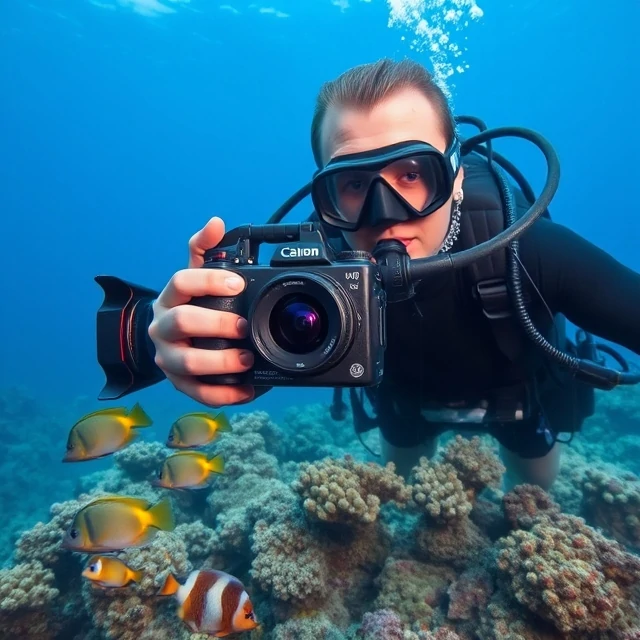
Water changes everything. Light bends, colors fade, and the camera must be protected from the environment. Underwater photography is the practice of taking photographs beneath the surface. It is used for marine biology, underwater archaeology, sports, and art. The challenges are unique. Water absorbs red light first, so images taken at depth look blue or green. A strobe or filter is needed to restore color. Water also reduces contrast and clarity, especially when there are particles in suspension. The deeper you go, the darker it gets.
Underwater cameras come in two main types. Amphibious cameras are designed to be used in water. Housings are waterproof cases that hold a regular camera. Housings are more versatile, because they allow the use of different lenses and accessories. They are also expensive and bulky. Underwater photography requires training. Divers must learn to control buoyancy, manage their air supply, and operate a camera at the same time. Photography is secondary to safety. The best underwater photographers are experienced divers first. They know the environment and the creatures they are photographing. They move slowly and carefully. They respect the reef and the animals that live there.
Underwater photography tips
- Get close. Water reduces clarity, so minimize distance.
- Use a strobe. Restore color that water absorbs.
- Shoot upward. Shoot toward the surface for better light.
- Control buoyancy. Stability matters underwater.
- Respect the environment. Do not touch or chase wildlife.
Underwater photography is not just photography. It is diving. The camera is secondary to the dive. Safety first, images second.
Comments (2)
Leave a comment