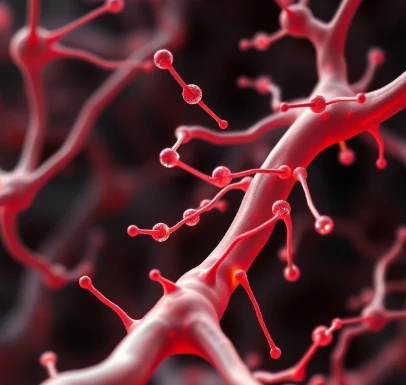
Glutamate is the primary excitatory neurotransmitter in the mammalian brain. It increases the likelihood that a neuron will fire and is essential for fast synaptic transmission, learning, and memory.
Glutamate acts at several receptor types, including AMPA and NMDA receptors. AMPA receptors mediate rapid excitatory postsynaptic potentials. NMDA receptors, which require both glutamate and postsynaptic depolarization to open, play a critical role in synaptic plasticity. The coincidence detection performed by NMDA receptors is widely regarded as a cellular mechanism of learning: when pre- and postsynaptic activity coincide, calcium enters and triggers the lasting changes that strengthen the synapse.
Too much glutamate is toxic. Overactivation of glutamate receptors can kill neurons, a process implicated in stroke, traumatic brain injury, and certain neurodegenerative diseases. Drugs that modulate glutamate transmission are under investigation for depression, schizophrenia, and cognitive enhancement.
When one neuron rapidly excites another, glutamate is usually the messenger.
Comments
No comments yet. Be the first to share a thought.
Leave a comment