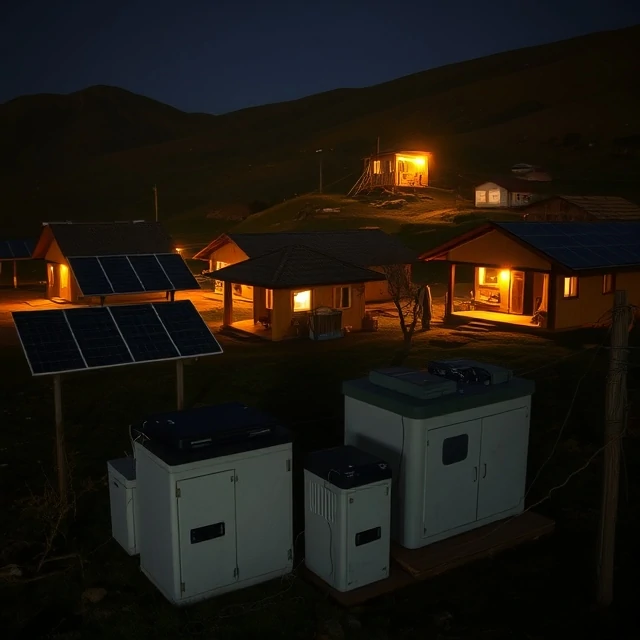
A microgrid is a small electricity grid that can operate on its own. It has its own generation, storage, and loads. It connects to the main grid when convenient and disconnects when needed. That ability to island is what defines it.
Microgrids serve campuses, hospitals, military bases, remote villages, and neighborhoods. A hospital microgrid keeps operating rooms lit during a blackout. A village microgrid powered by solar and batteries brings electricity to places the main grid never reached. A campus microgrid balances its own solar, batteries, and generators.
The technology is maturing. Controllers manage the flow between sources and loads. Batteries smooth the variability of renewables. Costs are falling, but they remain higher than grid power in most places. The value is resilience. When the main grid fails, a microgrid keeps the lights on. That is worth a lot to a data center or a dialysis clinic.
Common components
- Local generation
- Battery storage
- Control system
- Switchgear for islanding
- Load management
Comments
No comments yet. Be the first to share a thought.
Leave a comment