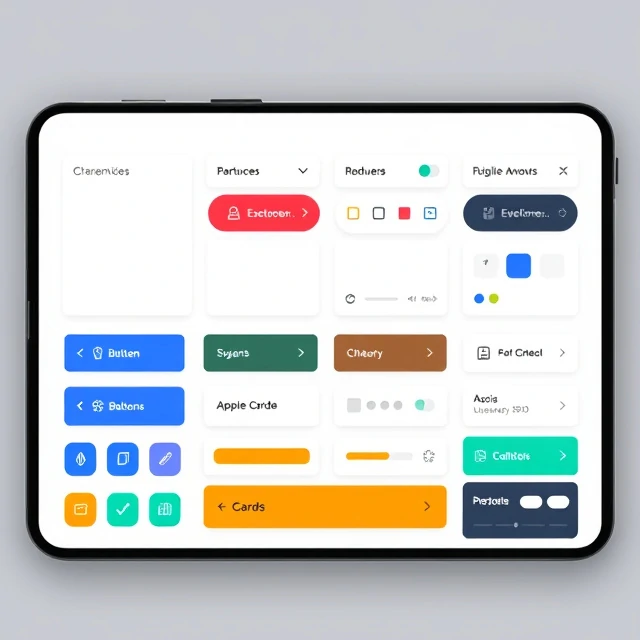
Material Design is a design language developed by Google. It debuted in 2014 as a unified system for Android and Google's web products. The system uses depth, motion, and grid-based layouts. Surfaces and edges provide visual cues. Shadows indicate elevation. Elements cast shadows to show their relationship to the surface beneath them. The design mimics physical materials, hence the name. But it is not skeuomorphism. It does not imitate leather or wood. It abstracts the properties of paper and ink into a digital system.
Material Design provides guidelines for layout, color, typography, iconography, and motion. The grid is based on an 8dp spacing system. Components have defined states: default, hover, focus, pressed, and disabled. Motion is purposeful. Animations show where elements come from and where they go. They guide attention and provide feedback. The system has evolved. Material Design 2 refined the components. Material Design 3 introduced dynamic color, which generates palettes from a user's wallpaper. The system is open. Developers and designers can use it for free. It has been adopted beyond Google's products. Many apps use Material components because they are familiar and well-tested. The system is not perfect. Critics say it looks generic. Every app that follows it looks like every other app. The trade-off is consistency. Material Design gives teams a shared language. They can build faster because the decisions are already made.
Material Design principles
- Material metaphor — surfaces and edges provide cues
- Bold graphics — intentional color and imagery
- Motion — animations guide and inform
- Adaptive — works across devices and screen sizes
- Grid-based — 8dp spacing system
Material Design is a system. It makes design decisions easier by providing defaults. The defaults can be followed or overridden. The system is a starting point, not a straitjacket.
Comments
No comments yet. Be the first to share a thought.
Leave a comment