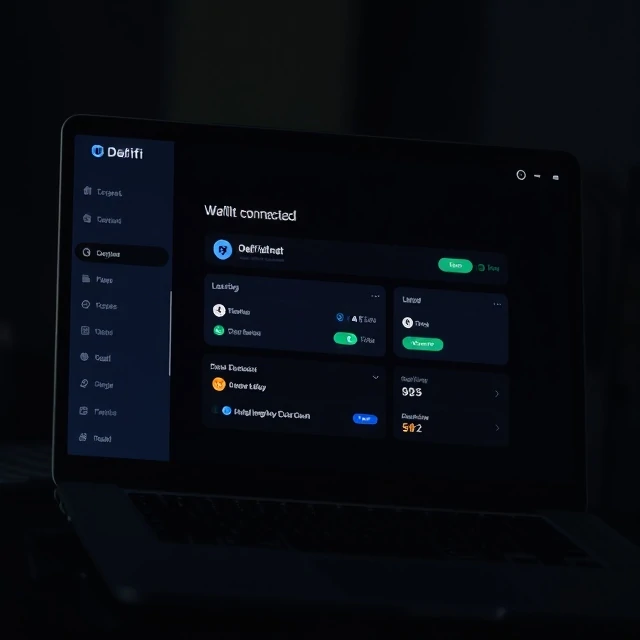
A decentralized application runs on a blockchain instead of a company's server. The backend logic lives in a smart contract. The frontend is often a website, but it can be anything that connects to a wallet. Uniswap is a dapp. Aave is a dapp. Any interface that lets you interact with an on-chain protocol is a dapp.
The difference from a regular app is control. A company can shut down its servers and your app stops working. A dapp's smart contract lives on the blockchain. As long as the chain runs, the contract runs. Nobody can unilaterally shut it down. That permanence cuts both ways. A bug in the contract cannot be patched easily. If funds are stolen, there is no support line to call. The code is law, and the law can be harsh.
Dapp building blocks
- Smart contract — the on-chain logic
- Wallet — how users sign transactions
- Frontend — the interface, often a web page
- Indexing service — reads blockchain data for the UI
Dapps have not reached mainstream usability. Gas fees, wallet setup, and seed phrase management are friction points. The user experience is getting better, but it still assumes a certain level of technical comfort.
Comments
No comments yet. Be the first to share a thought.
Leave a comment