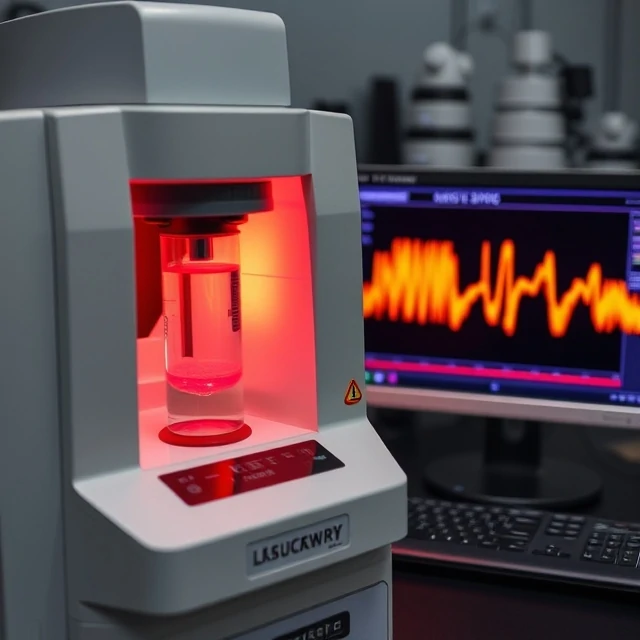
Molecules vibrate. Their bonds stretch, bend, and twist at specific frequencies. When infrared light hits a molecule, it is absorbed if its frequency matches the vibration. The result is an infrared spectrum, a plot of absorbed frequencies. Each functional group absorbs at characteristic frequencies, making infrared spectroscopy a powerful tool for identifying chemical groups.
The technique works by passing infrared light through a sample and measuring how much is absorbed at each wavelength. The resulting spectrum shows peaks at specific wavenumbers, usually between 4000 and 400 cm^-1. A broad peak around 3300 cm^-1 indicates an O-H or N-H bond. A sharp peak around 1700 cm^-1 indicates a C=O bond. A peak around 2200 cm^-1 indicates a C≡N or C≡C bond. The fingerprint region below 1500 cm^-1 is complex but unique to each molecule.
Infrared spectroscopy is used in organic chemistry to identify functional groups, in forensic science to analyze evidence, in pharmaceutical quality control to verify drug identity, and in environmental monitoring to detect pollutants. It is fast, non-destructive, and requires minimal sample preparation. Portable infrared spectrometers are used in the field.
The technique is not without limitations. It cannot determine the full structure of a molecule. It is best used alongside other methods, like nuclear magnetic resonance and mass spectrometry. But for identifying functional groups, it is unmatched.
Comments
No comments yet. Be the first to share a thought.
Leave a comment