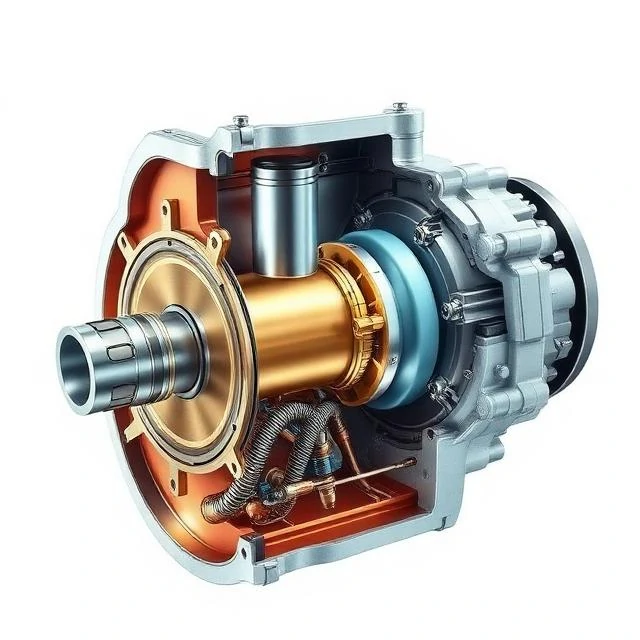
Rudolf Diesel patented his engine in 1892. It works differently from a gasoline engine. Instead of mixing fuel and air and igniting it with a spark, a diesel engine compresses air so much that it becomes hot enough to ignite fuel on contact. The compression ratio is much higher, typically 14:1 to 25:1, compared to 8:1 to 12:1 for gasoline. That gives diesel engines more torque and better fuel efficiency.
The engine has no spark plugs. It has fuel injectors that spray diesel directly into the combustion chamber at the right moment. The fuel ignites from the heat of compression. The combustion is uneven and noisy, which is why diesel engines clatter. Modern common-rail injection and turbocharging have made them quieter, cleaner, and more powerful.
Diesel engines are common in trucks, buses, ships, trains, and heavy equipment. They are also popular in passenger cars in Europe, where fuel taxes favor diesel. In the United States, diesel cars are a niche market, partly because of the Volkswagen emissions scandal, which revealed that some cars cheated on emissions tests.
Diesel exhaust contains nitrogen oxides and particulate matter, which harm air quality. Modern systems use selective catalytic reduction, diesel particulate filters, and exhaust gas recirculation to clean it up. The engines are efficient, but they are not clean without aftertreatment.
Comments
No comments yet. Be the first to share a thought.
Leave a comment