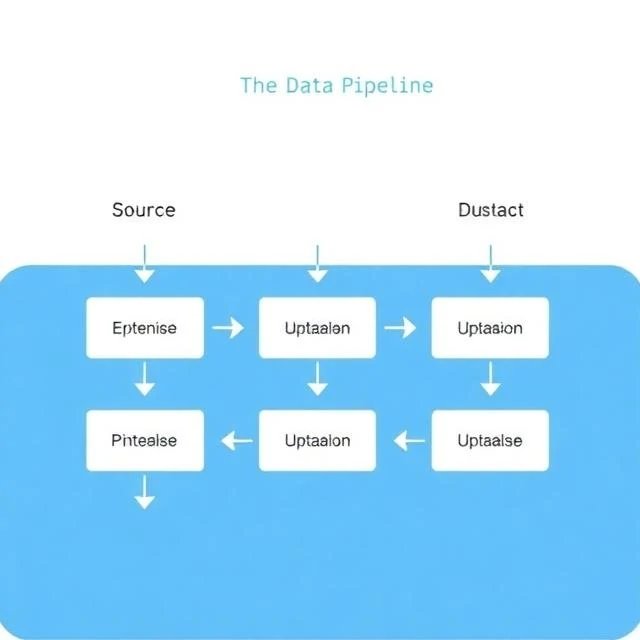
Data ingestion imports data into a system for processing. It is the first step in the pipeline. Data arrives from databases, APIs, log files, message queues, and sensors. The ingestion layer collects it, validates it, and hands it off to storage or processing. If ingestion fails, everything downstream stops.
The method depends on the source and the latency requirement. Batch ingestion pulls data at scheduled intervals. It is simple and efficient for sources that update slowly. Streaming ingestion processes data as it arrives, which is necessary for real-time analytics and event-driven systems. The tools vary: Kafka for high-throughput streams, Airflow for batch orchestration, cloud-native services for managed pipelines. The challenges are consistent. Sources change their schemas without warning. Data arrives late or out of order. Volumes spike unpredictably. The ingestion layer must handle all of it without losing data or corrupting it. Backpressure mechanisms prevent overload. Dead-letter queues capture records that fail processing. Monitoring catches problems before they cascade. Ingestion is plumbing, but bad plumbing floods the house.
Ingestion patterns
- Batch — scheduled pulls at intervals
- Streaming — continuous processing as data arrives
- Change data capture — captures database changes in real time
- API polling — periodic requests to external services
- Webhooks — push notifications from source systems
Ingestion is the front door. If data gets lost or corrupted here, no downstream fix can recover it.
Comments
No comments yet. Be the first to share a thought.
Leave a comment