State estimation determines a robot's condition from sensor data. The state includes position, orientation, velocity, and sometimes internal variables like joint angles or battery level. Sensors measure indirectly and noisily. State estimation combines the measurements with a model of how the robot moves to produce the best guess.
The Kalman filter is the classic tool. It predicts the next state using the motion model, then updates the prediction with sensor data. The result is a weighted average of prediction and measurement. The weights come from the uncertainty of each. If the model is confident and the sensor is noisy, the filter trusts the model more. If the sensor is precise, it trusts the sensor.
State estimation challenges
- Nonlinear motion: Kalman filter needs linearization.
- Non-Gaussian noise: particle filters handle it.
- Outliers: a bad measurement can corrupt the estimate.
- Latency: delayed measurements cause errors.
- Observability: some states cannot be estimated from available sensors.
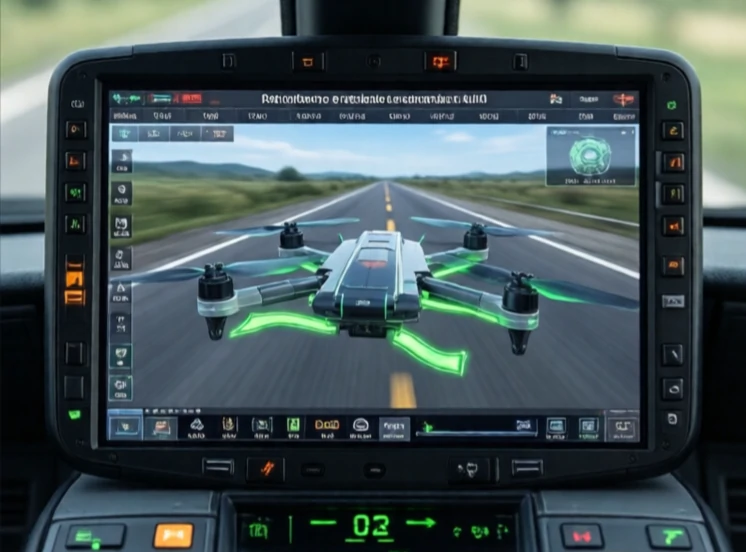
State estimation is everywhere in robotics. A drone estimates its attitude from gyroscope and accelerometer data. A car estimates its position from GPS, IMU, and wheel speed. A robot arm estimates joint angles from encoders. The estimate feeds the controller, which decides what to do next. A bad estimate leads to bad decisions. A good estimate is invisible. The robot just works. State estimation is not about having perfect sensors. It is about extracting the most useful information from imperfect ones. That is why it is one of the most important topics in robotics.
Comments
No comments yet. Be the first to share a thought.
Leave a comment