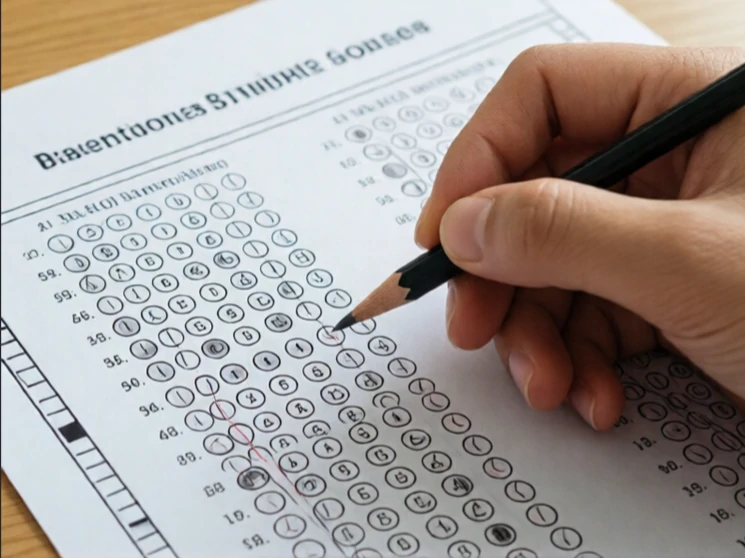
Recognition is a measure of memory in which a person need only identify items previously learned, as in a multiple-choice test or a police lineup. It is generally easier than recall because the items themselves serve as cues.
Recognition relies on a sense of familiarity and on the retrieval of specific details. Dual-process theories distinguish familiarity, a fast feeling of having seen something before, from recollection, the slower retrieval of contextual details. Recognition is used in everyday life when identifying faces, objects, and words.
Key points
- Identify previously learned items
- Easier than recall
- Involves familiarity and recollection
- Used in multiple-choice tests and lineups
Comments
No comments yet. Be the first to share a thought.
Leave a comment