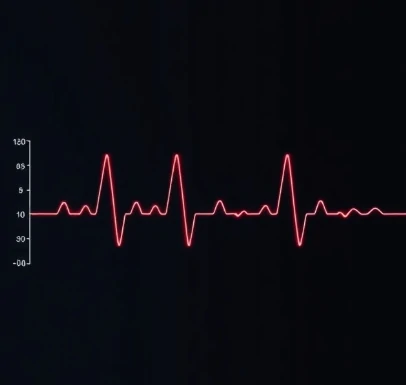
An action potential is a brief electrical pulse that travels along the axon of a neuron. It is the fundamental signal by which nerve cells communicate over distance.
At rest the inside of the axon is negatively charged relative to the outside. When a sufficient depolarizing stimulus arrives at the axon hillock, voltage-gated sodium channels open, sodium rushes in, and the membrane potential rapidly reverses. Almost immediately the sodium channels inactivate and potassium channels open, restoring the negative interior. The whole sequence lasts about a millisecond. Because the depolarization at one point triggers the same sequence at the next point, the impulse propagates without losing strength all the way to the axon terminals.
The all-or-none character of the action potential means that stronger stimuli do not produce larger spikes; they produce more frequent spikes. Myelin sheaths allow the impulse to jump from node to node, greatly increasing speed. Local anesthetics work by blocking the sodium channels and thereby preventing the action potential from forming.
Every thought, sensation, and movement depends on the reliable firing of these tiny electrochemical events.
Comments (2)
Leave a comment