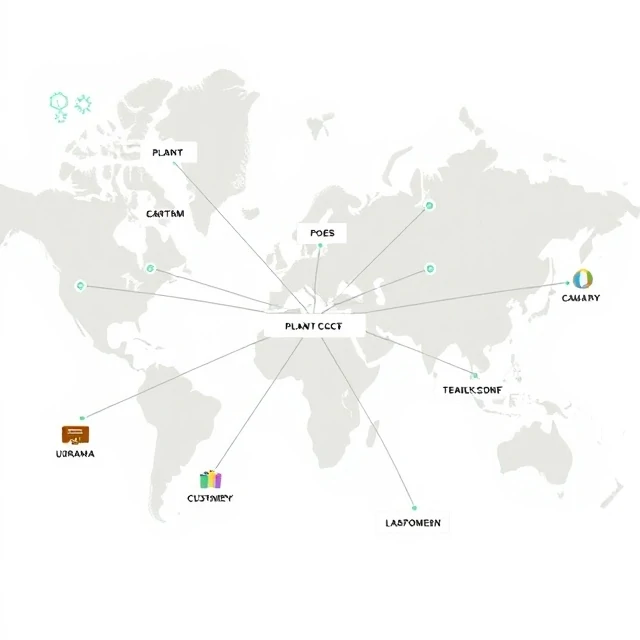
Goods move through a web of places and paths. A logistics network is the interconnected system of suppliers, plants, warehouses, terminals, and transportation links that together enable the flow of products to customers.
Network design decides how many facilities to operate, where to locate them, and which lanes connect them. Cost, service time, and risk all depend on those structural choices. Changes in demand patterns or transport costs periodically force redesign.
Visibility tools show inventory and shipments across the network in near real time. Resilience depends on alternative paths when primary nodes fail. A well-designed network is invisible to customers yet decisive for margin and reliability.
- System of facilities and routes for moving goods
- Includes plants, warehouses, terminals, and lanes
- Designed for cost, service, and risk balance
- Requires visibility and periodic redesign
Comments (2)
Leave a comment