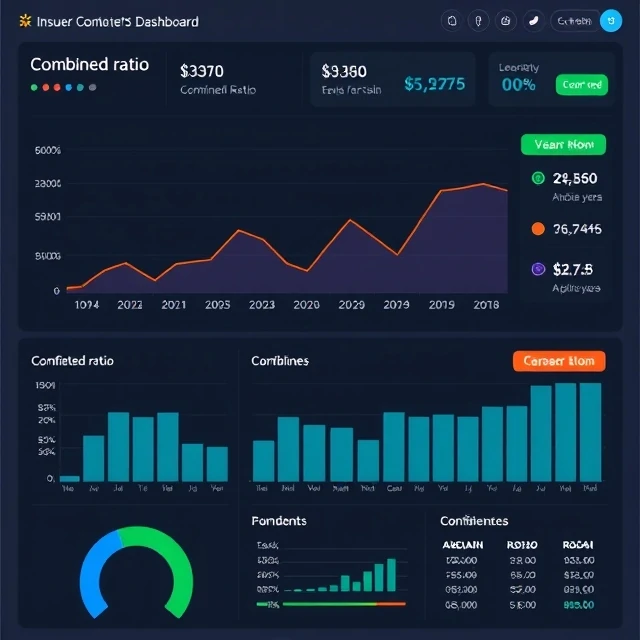
Underwriting profit is not the same as overall profit. The combined ratio measures the sum of losses and expenses as a percentage of earned premium. A ratio below 100 percent indicates an underwriting profit; above 100 percent indicates an underwriting loss.
The ratio combines the loss ratio and the expense ratio into a single indicator of pure insurance operations. Investment income is excluded, so a company can still be profitable overall with a combined ratio modestly above 100 percent if investment returns are strong. Analysts and rating agencies watch the trend closely.
Different lines of business and different companies have different sustainable combined-ratio targets. Catastrophe losses can cause large temporary spikes. Management uses the ratio to judge pricing adequacy, expense control, and the success of underwriting initiatives over time.
- Sum of losses and expenses divided by earned premium
- Below 100 percent signals underwriting profit
- Excludes investment income
- Key metric for insurers and analysts
Comments
No comments yet. Be the first to share a thought.
Leave a comment