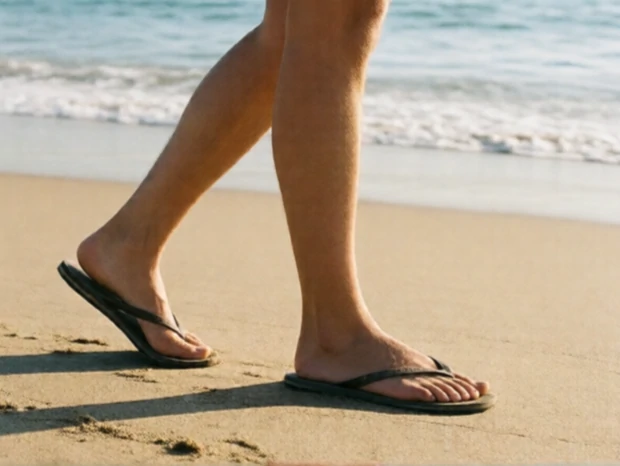
A sandal is an open shoe with straps that hold it to the foot. The toes and often the heel are exposed. Sandals are among the oldest footwear designs, worn in ancient Egypt, Greece, and Rome. The basic form has changed little: a sole, a few straps, and a fastening. What varies is the material, the height, and the styling.
Types are numerous. The flip-flop is a simple rubber sandal with a thong between the toes. The gladiator sandal has multiple straps that wrap up the ankle. The slide has a single wide band across the foot. The wedge sandal has a solid heel that runs from heel to toe. The strappy heeled sandal is common for evening wear. Sport sandals have adjustable straps and cushioned soles for hiking or water activities. Each type suits a different purpose.
Materials range from leather and suede to rubber, synthetic fabrics, and cork. Leather molds to the foot over time and lasts for years with care. Rubber is waterproof and easy to clean. Cork is lightweight and supportive. Fit matters. Straps should hold the foot without cutting into the skin. A sandal that is too loose causes blisters. Too tight, and it restricts movement. Sandals are seasonal in many climates, worn in warm weather. In some cultures, they are everyday footwear year-round.
Common types
- Flip-flop
- Gladiator
- Slide
- Wedge
- Strappy heeled and sport
Comments
No comments yet. Be the first to share a thought.
Leave a comment