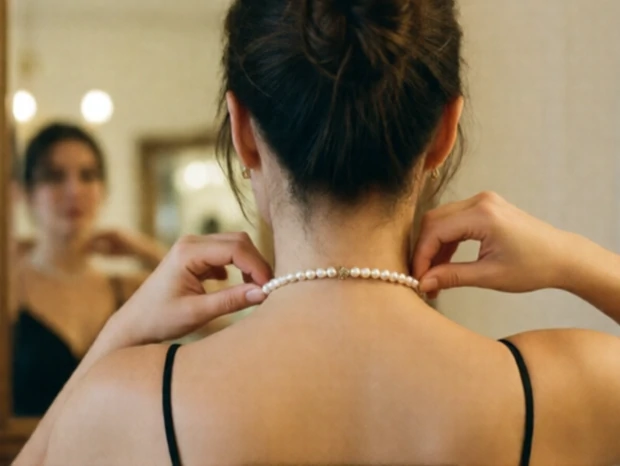
A necklace sits around the neck. It is one of the oldest forms of jewelry, with beads and shells found in graves tens of thousands of years old. The basic structure is a chain, cord, or strand holding a pendant, gemstone, or series of beads. The length determines where it falls on the body. A choker sits at the throat. A princess length reaches the collarbone. An opera length drops below the bust.
Styles vary widely. A pendant necklace features a single hanging element. A chain necklace is a simple linked strand. A pearl strand is a classic. A statement necklace uses large or clustered elements to draw attention. A lariat has no clasp and ties at the front. A choker wraps tightly around the neck. Layering multiple necklaces is a common styling choice, though it requires attention to lengths and weights to avoid tangling.
Materials range from precious metals and gemstones to wood, leather, glass, and plastic. Gold, silver, and platinum are common for fine jewelry. Plated and filled metals offer lower-cost alternatives. Care depends on the material. Silver tarnishes and needs polishing. Pearls should be kept away from perfume and stored separately to avoid scratching. Chains should be clasped and laid flat to prevent knots. A well-made necklace can last for decades and be passed down.
Common styles
- Pendant
- Chain
- Pearl strand
- Statement
- Choker and lariat
Comments
No comments yet. Be the first to share a thought.
Leave a comment