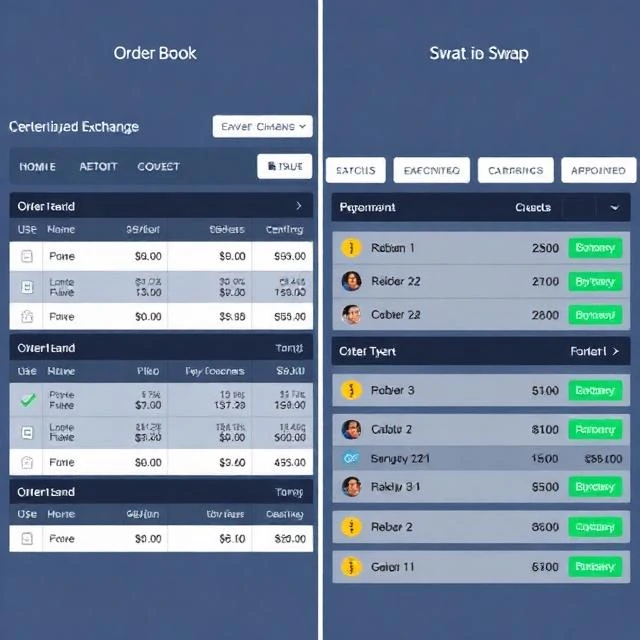
An exchange is where crypto gets bought and sold. There are two kinds. Centralized exchanges like Coinbase and Binance hold your funds and run an order book. Decentralized exchanges like Uniswap let you trade from your own wallet against a liquidity pool. CEXs are faster and easier for beginners. DEXs give you control and require no identity verification.
The line between them is blurring. Some CEXs offer non-custodial wallets. Some DEXs add features that look like centralized services. The core difference remains custody. On a CEX, you trust the company with your assets. On a DEX, you trust the code. Both have risks. CEXs get hacked, freeze withdrawals, and go bankrupt. DEXs get exploited by bugs and sandwiched by MEV bots. The safest approach is to use both for what they are good at. Trade on a CEX if you need speed and liquidity. Move long-term holdings to a wallet you control. Use a DEX when you want to trade a token that is not listed on major platforms.
Exchange types
- Centralized — order book, custodial, KYC required
- Decentralized — AMM-based, non-custodial, permissionless
- Hybrid — combines elements of both
No exchange is risk-free. Diversify where you keep your assets.
Comments
No comments yet. Be the first to share a thought.
Leave a comment