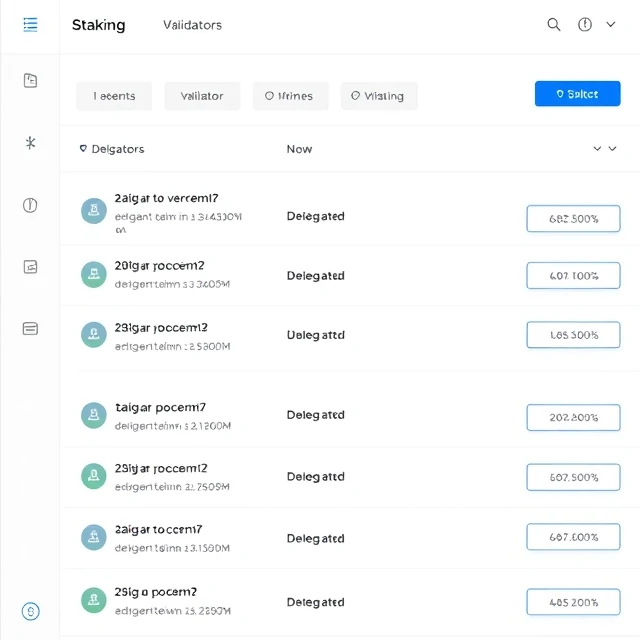
Delegation lets you assign your staking power to a validator without giving up ownership of your tokens. In proof-of-stake networks, you lock tokens to help secure the chain and earn rewards. Running your own validator requires technical skill and a reliable server. Delegation removes that barrier. You pick a validator, delegate your tokens, and collect a share of the rewards. The tokens stay in your wallet. The validator cannot spend them. They can only use the voting power you have assigned.
Cosmos, Polkadot, and Cardano all use delegation. The validator takes a commission, usually 5 to 20 percent of the rewards. If the validator misbehaves, the network can slash their stake. Your delegated tokens can be slashed too. That is the risk. Choose a validator with a good track record and reasonable commission. Delegating to the largest validator concentrates power and weakens the network. Spread your delegation across a few reliable ones instead.
Delegation essentials
- Your tokens remain in your wallet — the validator cannot move them
- Rewards accrue automatically or require manual claiming
- Unbonding periods lock your tokens for days or weeks
- Slashing penalties apply if the validator fails or attacks the network
Delegation is passive income with active risks. Do not delegate to a validator you have not researched.
Comments (3)
Leave a comment