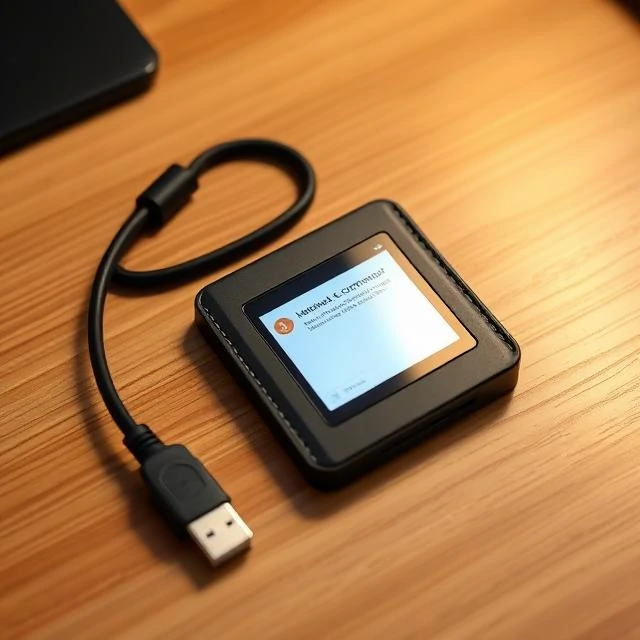
Cold storage keeps private keys offline. A hardware wallet is the most common form: a small device that looks like a USB stick, holds your keys, and signs transactions only when you plug it in and confirm. The keys never touch the internet. Malware on your computer cannot steal what it cannot reach.
Paper wallets are the low-tech version. You print your public and private keys on paper, store it in a safe, and never photograph it or type the private key into a computer. Paper wallets work, but they are fragile. Fire, water, and accidental disposal destroy them. Hardware wallets are more practical for regular use. They cost $50 to $200 and support multiple coins. The trade-off is convenience. Every transaction requires the device. That friction is the point. It makes you pause before sending.
Cold storage options
- Hardware wallet — dedicated device with secure element
- Paper wallet — printed keys, offline, fragile
- Air-gapped computer — offline machine used only for signing
- Metal backup — seed phrase stamped into steel, fire and water resistant
Most people do not need a complicated setup. A hardware wallet and a metal seed backup cover the essentials. Do not invent your own scheme. Use tools that have been tested by thousands of users.
Comments
No comments yet. Be the first to share a thought.
Leave a comment