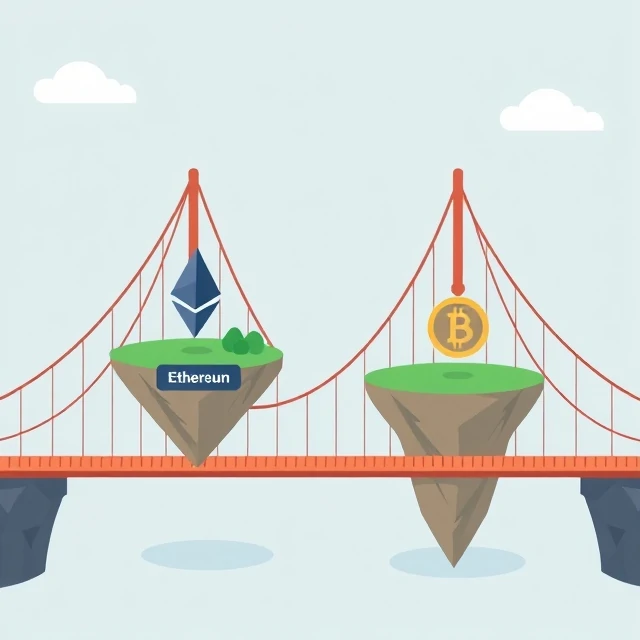
A bridge moves assets from one blockchain to another. You deposit tokens on the source chain, the bridge locks them in a smart contract, and an equivalent token is minted on the destination chain. That new token is called a wrapped asset. When you want to go back, the wrapped token is burned and the original is released. The bridge acts as a translator between networks that cannot talk to each other natively.
Bridges unlock liquidity and functionality. You can use a token from Ethereum on Arbitrum to access cheaper transactions, or move assets to a chain with a specific application you need. Without bridges, each blockchain would be an isolated island. The trade-off is risk. Bridges hold enormous amounts of locked value, which makes them a prime target. Several major bridge hacks have drained hundreds of millions of dollars. The code is complex, and a single vulnerability can be catastrophic.
Bridge types
- Centralized — operated by one entity, faster but requires trust
- Decentralized — smart contracts and validators, no single point of control
- Atomic swap — peer-to-peer exchange without an intermediary
- Relay-based — one chain listens to another through relay nodes or oracles
Use reputable bridges with audits and time-tested code. A cheap bridge with no track record is not a bargain.
Comments
No comments yet. Be the first to share a thought.
Leave a comment