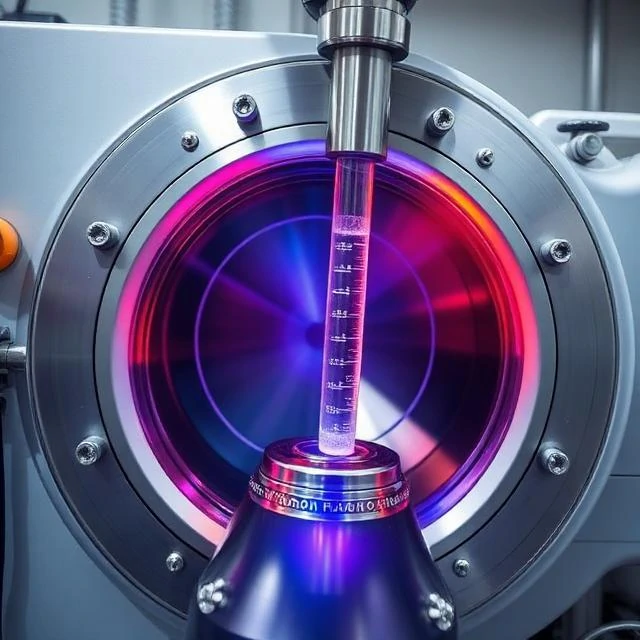
Nuclear magnetic resonance, or NMR, uses magnetic fields and radio waves to determine the structure of molecules. It is one of the most powerful analytical techniques in chemistry. It was developed in the 1940s and won Nobel Prizes for physics in 1952 and chemistry in 1991 and 2002. It is the basis of MRI, which images the human body.
The technique works because certain atomic nuclei, like hydrogen-1 and carbon-13, have a magnetic spin. In a strong magnetic field, the spins align either with or against the field. Radio waves at the right frequency flip the spins. The frequency depends on the chemical environment of the nucleus. Electrons shield the nucleus from the magnetic field, and the shielding depends on nearby atoms. The result is a spectrum of peaks at different frequencies, revealing the structure of the molecule.
NMR can determine the connectivity of atoms, the stereochemistry of molecules, and the dynamics of molecular motion. It can study proteins in solution, monitor chemical reactions in real time, and analyze mixtures without separation. It is non-destructive and requires only a small sample.
The instruments are expensive and require specialized facilities. A high-field NMR spectrometer can cost millions of dollars and needs a superconducting magnet cooled with liquid helium. But for structural determination, nothing else comes close.
Comments
No comments yet. Be the first to share a thought.
Leave a comment