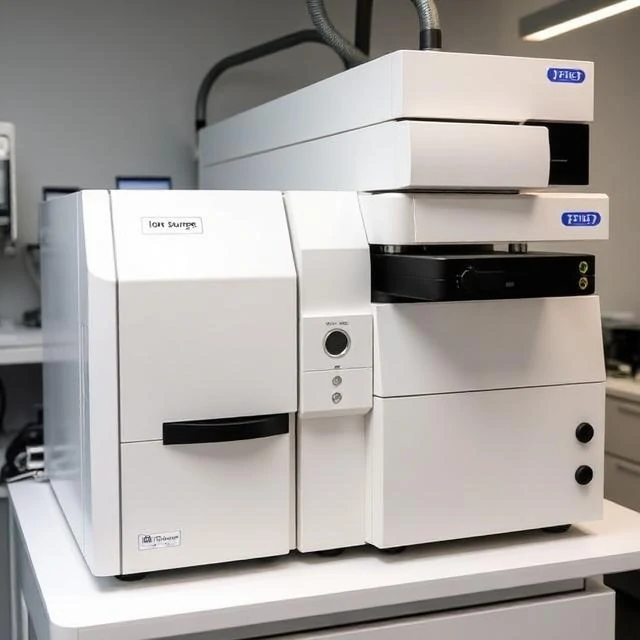
Mass spectrometry identifies molecules by their mass. A sample is vaporized, ionized, and accelerated through a magnetic or electric field. The ions separate based on their mass-to-charge ratio. A detector records the abundance of each ion. The result is a mass spectrum, a plot of intensity versus mass-to-charge ratio. It is one of the most sensitive and versatile analytical techniques available.
The instrument has several components. The ion source converts molecules into ions, often by electron impact or electrospray ionization. The mass analyzer separates the ions, using time-of-flight, quadrupole, or ion trap technology. The detector counts the ions. A computer processes the data. Tandem mass spectrometry, or MS/MS, fragments the ions and analyzes the fragments, providing structural information.
Mass spectrometry is used in chemistry, biology, medicine, and environmental science. It identifies unknown compounds, quantifies drugs and metabolites in blood, detects pollutants in water, and sequences proteins. It is used in doping control, forensics, and food safety. It can detect attomoles of a substance, which is a few hundred thousand molecules.
The technique requires careful sample preparation and instrument calibration. It is not cheap. But for sensitivity and specificity, it is hard to beat. It is the workhorse of analytical chemistry.
Comments
No comments yet. Be the first to share a thought.
Leave a comment