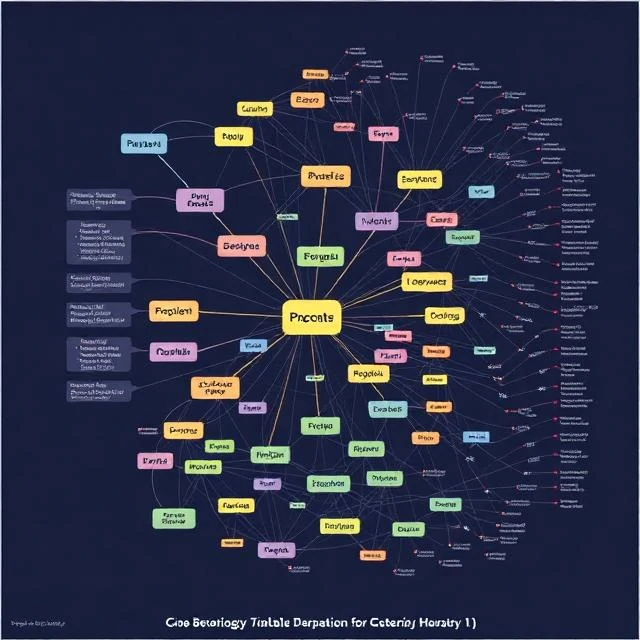
Biology has traditionally studied one gene, one protein, or one pathway at a time. Systems biology takes a different approach. It studies the interactions between components of a biological system as a whole. It asks how networks of genes, proteins, and metabolites work together to produce behavior that no single component can explain. The whole is more than the sum of its parts.
The field relies on large-scale data. Genomics, transcriptomics, proteomics, and metabolomics generate vast datasets. Computational models integrate that data into networks and simulations. The models predict how the system responds to perturbations, like a drug or a mutation. They identify emergent properties that are not obvious from individual components.
Systems biology is used in many areas. In medicine, it identifies drug targets and biomarkers by looking at networks rather than single genes. In microbiology, it models how bacteria respond to antibiotics. In cancer, it studies the signaling networks that drive tumor growth. In ecology, it models interactions between species. The approach is holistic and quantitative.
The challenges are complexity and data integration. Biological systems are noisy, dynamic, and context-dependent. Models are simplifications. Data from different sources may not be comparable. But systems biology is maturing, and it is changing how we think about biology.
Comments
No comments yet. Be the first to share a thought.
Leave a comment