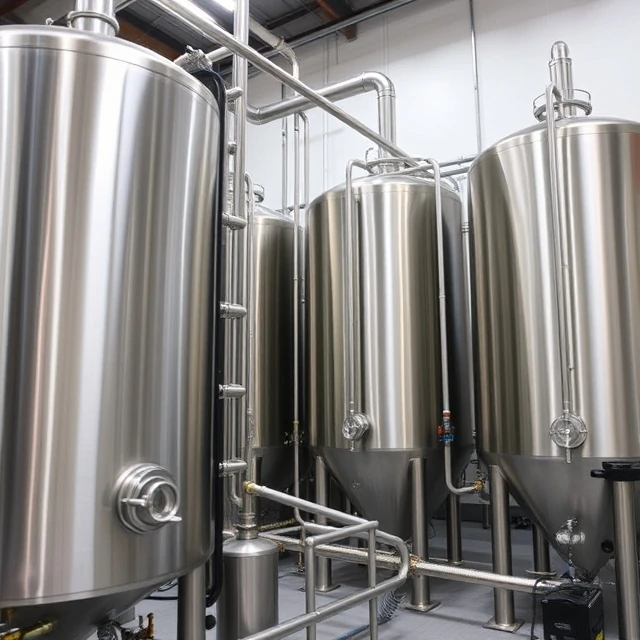
A bioreactor is a vessel that supports a biologically active environment. It is where cells grow, enzymes react, and products form. It provides the temperature, pH, oxygen, and nutrients that living systems need. It also provides mixing, so that cells and nutrients are distributed evenly. Without a bioreactor, biomanufacturing would be limited to shallow flasks and petri dishes.
Bioreactors come in many designs. Stirred-tank reactors are the workhorse of the industry. They use an impeller to mix the culture. Airlift reactors use gas flow to circulate the liquid. Packed-bed reactors hold cells or enzymes in a fixed matrix. Membrane bioreactors separate cells from the product continuously. The choice depends on the cells, the product, and the scale.
Scale-up is the hard part. A 10-liter bioreactor behaves differently from a 10,000-liter one. Mixing takes longer. Oxygen transfer becomes limiting. Heat builds up. Engineers use computational models and pilot plants to predict how a process will behave at scale. It is not always predictable.
Bioreactors are also used in waste treatment, where microbes break down pollutants, and in tissue engineering, where they provide a controlled environment for growing cells into tissues. The vessel is simple in concept. The engineering is not.
Comments
No comments yet. Be the first to share a thought.
Leave a comment