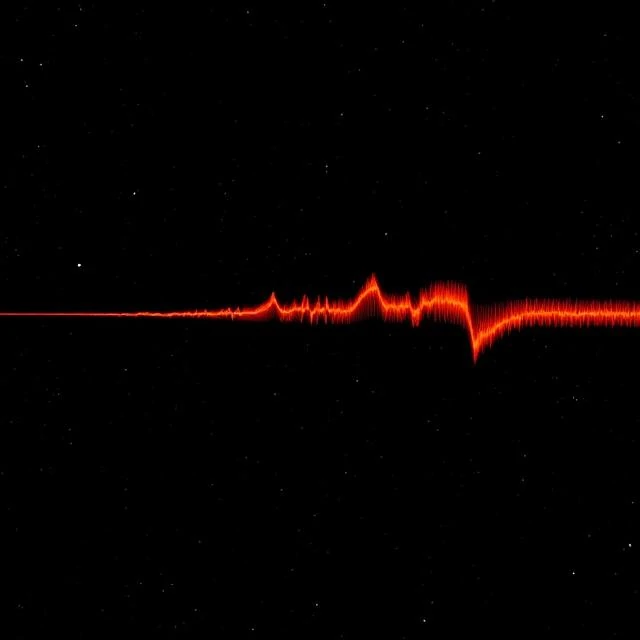
When an object moves away from an observer, the light it emits is stretched to longer wavelengths. For visible light, that means the color shifts toward the red end of the spectrum. That is redshift. It is the same effect as the Doppler shift you hear when an ambulance passes and its siren drops in pitch.
Redshift is the key to measuring the universe. In the 1920s, Edwin Hubble measured the redshifts of distant galaxies and found that the farther a galaxy is, the greater its redshift. That relationship, Hubble's law, is the primary evidence that the universe is expanding. The redshift is not caused by galaxies moving through space. It is caused by space itself stretching as light travels through it.
Redshift is also used to study the early universe. The cosmic microwave background has a redshift of about 1,100, meaning its light has been stretched by a factor of 1,100 since it was emitted. The most distant galaxies have redshifts greater than 13, meaning we see them as they were when the universe was only a few hundred million years old.
Redshift is not the only kind of shift. Gravitational redshift occurs when light escapes from a strong gravitational field, losing energy and stretching. It was confirmed by the Pound-Rebka experiment in 1959 and is a key prediction of general relativity.
Comments
No comments yet. Be the first to share a thought.
Leave a comment