Recurrent networks forget. Gradients fade as they propagate backward through time, and long-range dependencies vanish. Long short-term memory, introduced in 1997, solved much of the problem with a gating mechanism that controls what information persists.
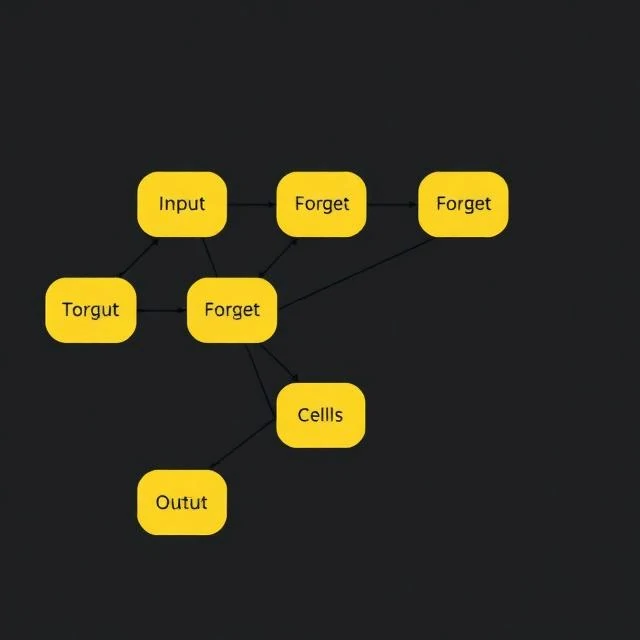
Three gates regulate the flow. The input gate decides what enters the cell state. The forget gate decides what to discard. The output gate decides what to expose. A cell state runs through the sequence, carrying information across many steps without degradation.
Common LSTM applications
- Speech recognition
- Machine translation before transformers
- Time series forecasting
- Handwriting recognition
- Music generation
Transformers replaced LSTMs for most sequence tasks because they parallelize better and handle longer contexts. LSTMs still appear in embedded systems and streaming applications where memory and latency constraints favour their efficient recurrence.
Comments
No comments yet. Be the first to share a thought.
Leave a comment