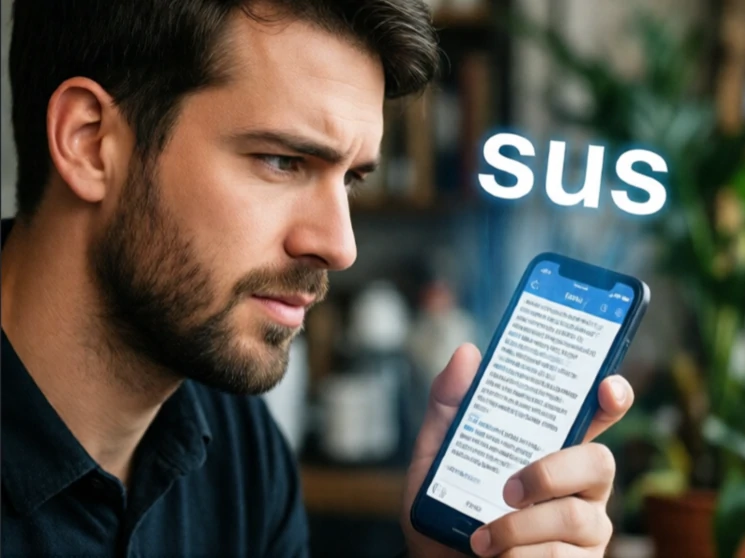
Sus is short for suspicious. When something or someone feels off, people call it sus. The word exploded in popularity through the game Among Us, where players hunted for impostors among crewmates. Accusing someone of being sus became the central social mechanic.
Outside the game the term stuck. A story that does not add up is sus. A sudden change in behavior is sus. A deal that seems too good is sus. The abbreviation works because it is quick and slightly playful. Calling something sus softens the accusation compared with saying “I think you’re lying.”
The word travels easily across group chats and comment sections. It can be serious or joking depending on tone. A friend who cancels plans at the last minute might get a light “kinda sus.” A stranger with an elaborate excuse might receive a harder version of the same judgment.
Like many gaming terms that escape into wider use, sus keeps a trace of its origin. The image of a cartoon crewmate pointing an accusing finger still floats behind the word for many people.
Comments
No comments yet. Be the first to share a thought.
Leave a comment