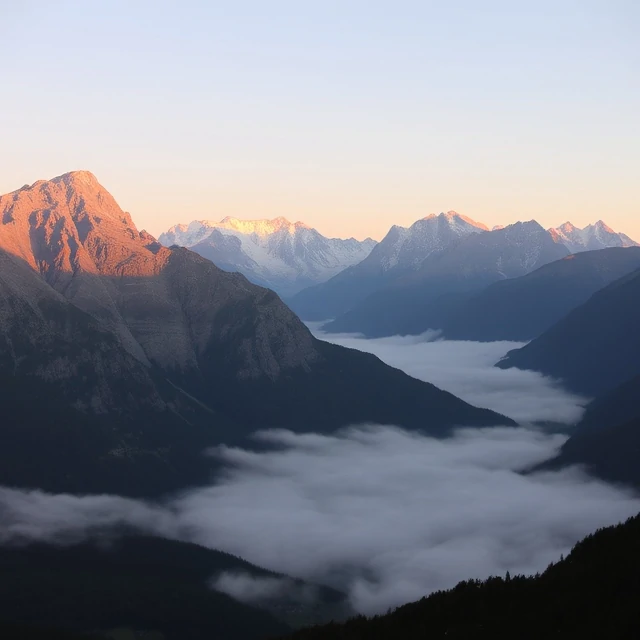
Landscape photography captures natural scenery: mountains, valleys, forests, coastlines, deserts, and skies. It is one of the oldest genres, and one of the most demanding. The photographer cannot direct the subject. The light changes. The weather shifts. The best landscape photographers are patient. They return to the same location again and again, waiting for the right conditions. Ansel Adams spent decades photographing Yosemite. His images are not just records of a place. They are interpretations, shaped by his choice of light, composition, and darkroom technique.
Landscape photography is not just about wide views. It can be intimate, focusing on a single rock, a pattern in the sand, or a reflection in a puddle. It can be grand, capturing a mountain range under a stormy sky. It can be abstract, using long exposures to blur water and clouds. The genre is broad, and it overlaps with nature photography, travel photography, and environmental photography. What unites it is a focus on the land and a respect for the natural world.
Landscape photography tips
- Scout. Visit locations in advance and plan compositions.
- Wait. The best light comes to those who are patient.
- Use a tripod. Allows slow shutter speeds and careful framing.
- Check the forecast. Weather can make or break a shot.
- Respect the land. Leave no trace and follow local rules.
Landscape photography is not just about taking pictures. It is about being there, paying attention, and seeing what others miss.
Comments
No comments yet. Be the first to share a thought.
Leave a comment