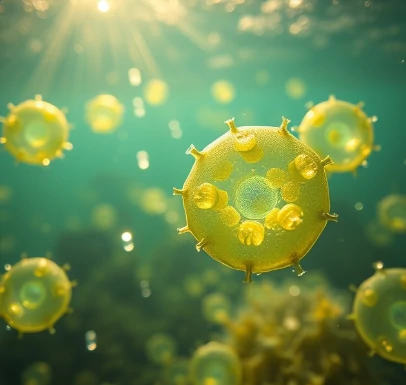
In the sunlit upper ocean, microscopic algae and larger seaweeds capture light energy and convert carbon dioxide and water into organic matter and oxygen. This process—photosynthesis—forms the base of nearly all marine food webs and supplies a substantial fraction of the oxygen in Earth’s atmosphere.
Phytoplankton perform the bulk of oceanic photosynthesis. Their productivity is limited by light, which decreases with depth, and by nutrients such as nitrogen, phosphorus, and iron. The depth at which photosynthesis balances respiration is the compensation depth; below it, net growth cannot be sustained. Seasonal and regional variations in light and nutrients create the familiar patterns of spring blooms and oligotrophic subtropical deserts.
Measuring photosynthesis involves bottle incubations, fluorescence techniques, and satellite estimates of chlorophyll. The organic carbon produced either fuels the food web, is respired in the upper ocean, or sinks into the deep ocean as part of the biological carbon pump. Changes in temperature, stratification, and nutrient supply are already altering patterns of marine primary production.
- Conversion of light energy into organic matter
- Performed mainly by phytoplankton in the ocean
- Base of marine food webs and oxygen source
- Limited by light and nutrients
Comments
No comments yet. Be the first to share a thought.
Leave a comment