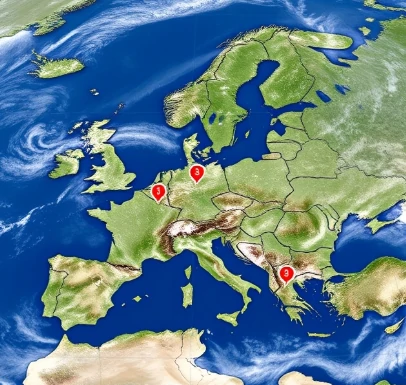
Air masses of different densities do not mix readily. The boundary between them is a front. Temperature, humidity, and wind often change abruptly across this zone. Clouds and precipitation frequently form where the air is forced to rise.
Cold fronts occur when colder air advances. Warm fronts occur when warmer air advances. Stationary fronts show little movement. Occluded fronts form when a cold front catches up to a warm front. Each type produces characteristic weather sequences.
Surface weather maps mark fronts with standardized symbols. Satellite imagery reveals the cloud bands that often accompany them. Understanding frontal structure remains central to short-range forecasting because the passage of a front usually brings a noticeable change in conditions.
- Boundary between differing air masses
- Produces temperature and wind shifts
- Often generates clouds and precipitation
- Classified by movement and structure
Comments
No comments yet. Be the first to share a thought.
Leave a comment