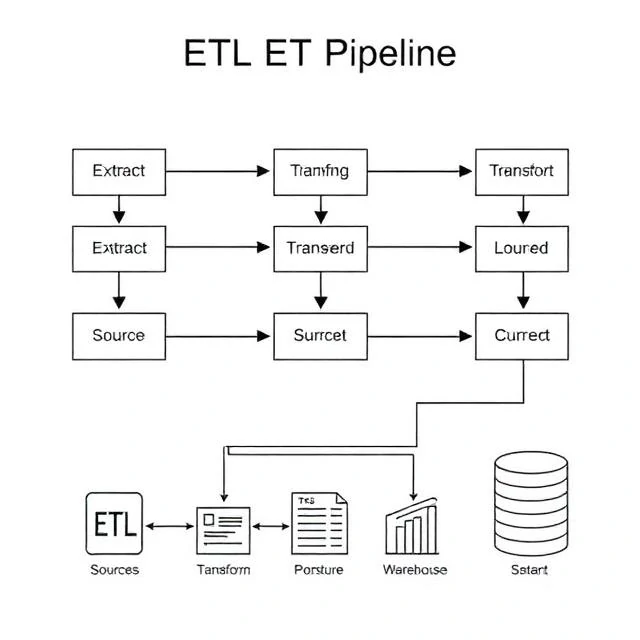
ETL stands for extract, transform, load. It has been the standard pattern for moving data into warehouses for decades. Extract pulls data from source systems. Transform cleans, validates, and reshapes it into the target schema. Load writes it into the warehouse. The transformation happens before loading, on a separate processing server. The warehouse receives clean, structured data.
ETL tools have evolved. Early ETL was hand-coded in SQL and scripts. Commercial tools like Informatica and DataStage added graphical interfaces and scheduling. Open-source options like Apache NiFi and Talend broadened access. The pattern remains the same: extract, transform, load. ETL is still the right choice when the target system cannot handle transformation workloads, when data volumes need reduction before loading, or when regulatory requirements demand that sensitive data be transformed before it leaves a controlled environment. It is also common in legacy environments where the warehouse is a traditional appliance with limited compute. The rise of cloud warehouses and ELT reduced ETL's dominance, but it did not eliminate it. Many organizations run both. ETL for legacy systems and sensitive data. ELT for cloud-native pipelines. The pattern is not obsolete. It is one option among several.
ETL characteristics
- Transform first — data cleaned before loading
- Separate processing — transformation on a dedicated server
- Reduced volume — only needed data reaches the warehouse
- Established — decades of tools and practices
- Legacy-friendly — works with traditional warehouses
ETL is the classic pattern. It still works. It is not always the best choice, but it is rarely wrong.
Comments
No comments yet. Be the first to share a thought.
Leave a comment