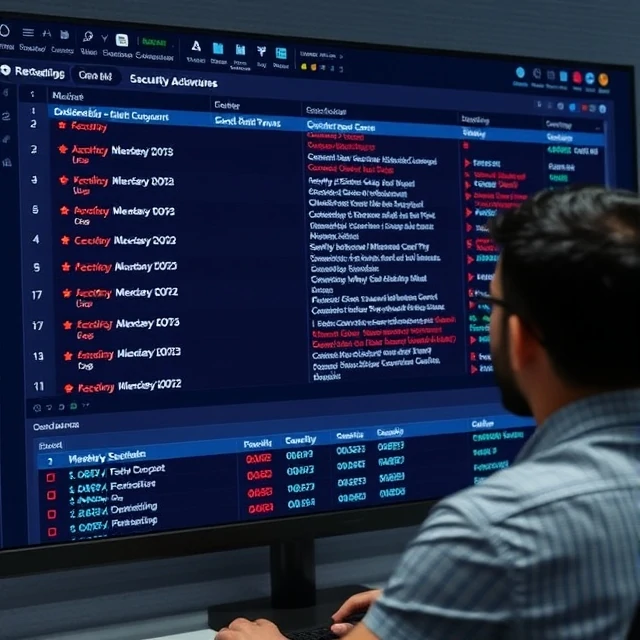
A SIEM collects logs from across an organization, normalizes them, and correlates events to detect threats. Firewalls, servers, endpoints, applications, and cloud services all generate logs. The SIEM pulls them into one place, parses the data, and applies rules to find patterns. A login failure is noise. A thousand login failures followed by a success is an alert. The SIEM surfaces that correlation.
SIEM platforms like Splunk, Microsoft Sentinel, and IBM QRadar are powerful but demanding. They require tuning. Out of the box, they generate too many alerts and too many false positives. Analysts drown. The value comes from careful rule development and threat intelligence integration. The SIEM also supports compliance. Auditors want to see that logs are collected, retained, and reviewed. The SIEM provides that evidence. Modern SIEMs add user behavior analytics and machine learning to detect anomalies that static rules miss. Some integrate with SOAR platforms for automated response. The SIEM is the central nervous system of a security operations center. Without it, analysts work blind. With it, they still have to work hard.
SIEM functions
- Log collection — gather data from many sources
- Normalization — convert formats into a common schema
- Correlation — link events across sources
- Alerting — notify analysts of suspicious activity
- Retention — store logs for compliance and investigation
A SIEM is only as good as the logs it receives and the rules it runs. Garbage in, noise out.
Comments
No comments yet. Be the first to share a thought.
Leave a comment