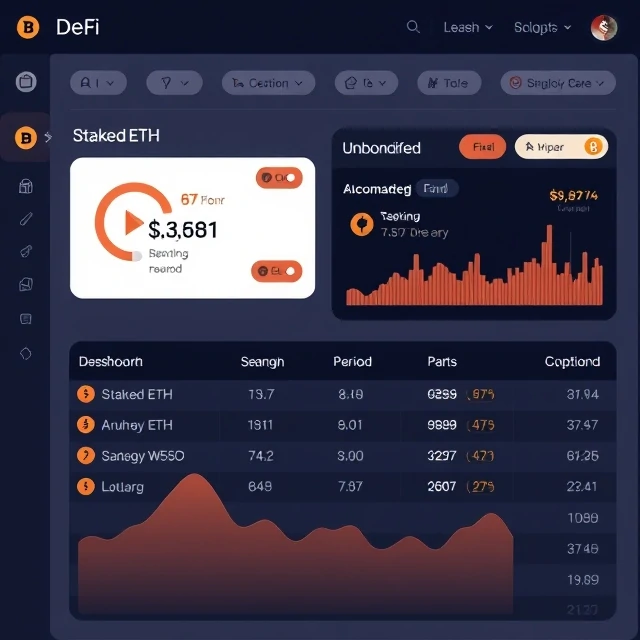
Staking locks cryptocurrency to support a proof-of-stake network and earn rewards. Validators stake coins as collateral. If they validate honestly, they earn new coins. If they cheat or go offline too long, they lose part of their stake. Delegators stake through validators and share the rewards. The tokens stay in the delegator's wallet. The validator cannot spend them. They can only use the voting power assigned to them.
Staking yields vary by network and validator. Ethereum staking rewards are around 3 to 5 percent per year. Cosmos chains offer higher yields, sometimes 10 percent or more. Higher yields usually mean higher risk or higher inflation. The unbonding period matters too. Ethereum takes about 5 days to unstake. Cosmos chains often take 21 days. That lock-up is a commitment. If the price drops while your coins are locked, you cannot sell. Staking is not free money. It is compensation for securing the network and accepting the risk of slashing, price volatility, and lock-up. For long-term holders, staking can be a way to earn yield on assets they were not planning to sell anyway.
Staking essentials
- Validators — run nodes, stake coins, earn rewards
- Delegators — stake through validators, share rewards
- Unbonding period — time to unstake, days to weeks
- Slashing risk — lose stake for misbehavior or downtime
Staking is not passive in the sense of risk-free. It is passive in the sense that you do not have to run a node. The risk is still real.
Comments
No comments yet. Be the first to share a thought.
Leave a comment