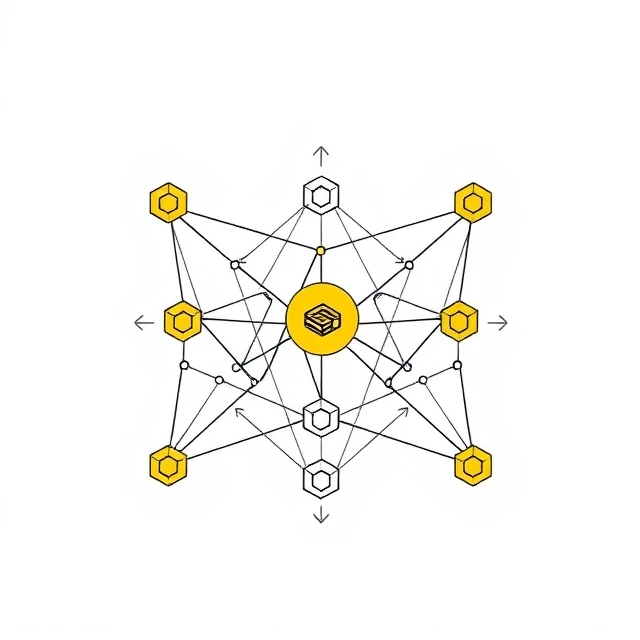
Sharding splits a blockchain into smaller pieces called shards. Each shard processes its own transactions and stores its own data. The shards communicate with each other through a coordination layer. The goal is parallelism. Instead of one chain processing every transaction, many chains process transactions at the same time. Throughput rises with the number of shards. Ethereum's roadmap includes sharding, though rollups have taken priority as the near-term scaling solution.
Sharding is technically difficult. Splitting a chain means splitting security. If one shard is compromised, the whole network is at risk. Cross-shard communication adds latency and complexity. Validators need to be assigned to shards randomly and rotated frequently to prevent collusion. The design must ensure that an attacker cannot concentrate power in one shard and take it over. Ethereum's danksharding proposal combines sharding with rollups. The shards store rollup data but do not execute transactions. Rollups handle execution. Sharding handles data availability. That division of labor is simpler and safer than full execution sharding.
Sharding trade-offs
- Throughput — scales with the number of shards
- Complexity — cross-shard communication is hard
- Security — each shard needs enough validators
- Data availability — shards must publish data for verification
Sharding is not a quick fix. It is a multi-year engineering effort with many moving parts. Rollups are delivering scaling today. Sharding is for tomorrow.
Comments
No comments yet. Be the first to share a thought.
Leave a comment