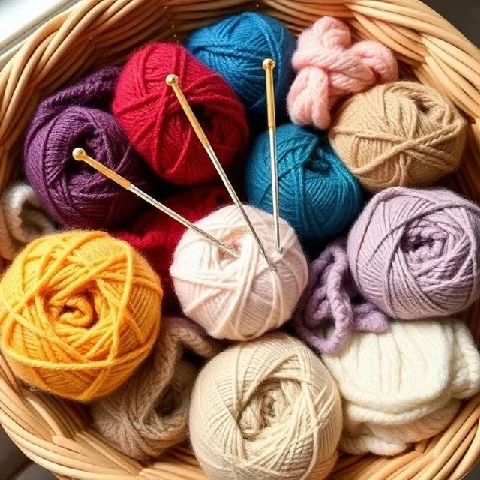
Yarn is a continuous strand of spun fibers used in knitting, crochet, weaving, and other fiber crafts. Animal fibers like wool, alpaca, and silk give warmth and elasticity. Plant fibers like cotton and linen are cool and strong. Synthetic fibers like acrylic and nylon are durable and easy to wash. Many yarns blend two or more fibers to combine their best qualities. A wool-nylon blend, for example, is warmer and stronger than wool alone.
Yarn weight describes thickness, not the weight of the ball. Fingering weight is thin and used for socks and shawls. DK weight is medium and versatile. Worsted weight is the most common for sweaters and blankets. Bulky weight works up fast for hats and cowls. The label also gives gauge, which is the number of stitches per inch on a recommended needle size. Gauge matters. If your gauge does not match the pattern, the finished garment will not fit.
Common yarn weights
- Lace — very fine, shawls and delicate work
- Fingering — thin, socks and lightweight garments
- Sport — slightly thicker than fingering
- DK — light medium, versatile
- Worsted — medium, sweaters and blankets
- Bulky — thick, quick projects
Store yarn in a dry place, away from moths. Natural fibers attract pests. A sealed bin or a cedar chest protects your stash. Wind skeins into balls before knitting, or use a swift and ball winder to keep the yarn clean and tangle-free.
Comments
No comments yet. Be the first to share a thought.
Leave a comment