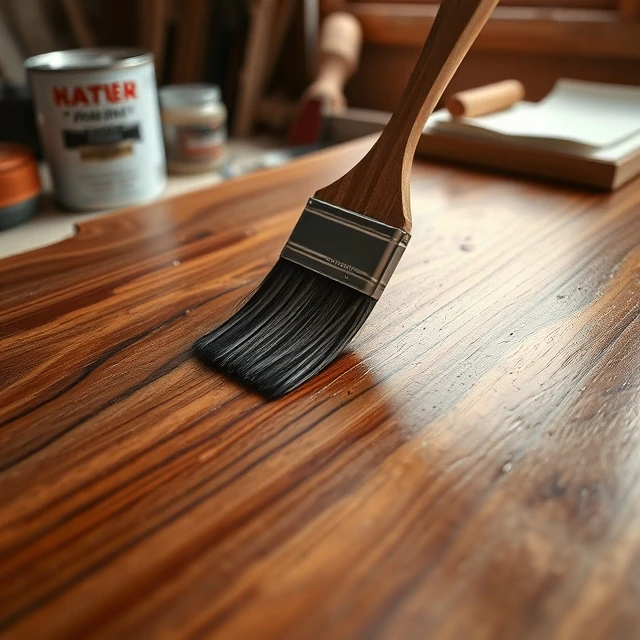
Varnish is a transparent coating that protects and finishes wood. It forms a film on the surface that resists moisture, scratches, and sunlight. That film is the difference between varnish and oil. Oil soaks into the wood and hardens from within. Varnish sits on top. Both protect, but they look and behave differently. Varnish gives a glossier, more uniform finish. Oil gives a softer, more natural look that is easier to spot-repair.
Traditional varnish is made from resin dissolved in a solvent. Polyurethane varnish is a modern synthetic version that is tough and widely available. Spar varnish contains UV inhibitors and stays flexible, which is why it is used on boats and outdoor furniture. Water-based varnishes dry faster and have less odor, but they can raise the grain and may not amber the wood as much as oil-based versions.
Varnish types
- Polyurethane — durable, good for furniture and floors
- Spar varnish — flexible, UV-resistant, outdoor use
- Water-based — fast-drying, low odor, easy cleanup
- Oil-based — warm amber tone, long dry time, strong fumes
Apply thin coats. Thick coats dry slowly, trap bubbles, and sag on vertical surfaces. Sand lightly between coats with fine paper. Wipe off the dust before the next coat. Three thin coats beat one thick one every time.
Comments
No comments yet. Be the first to share a thought.
Leave a comment