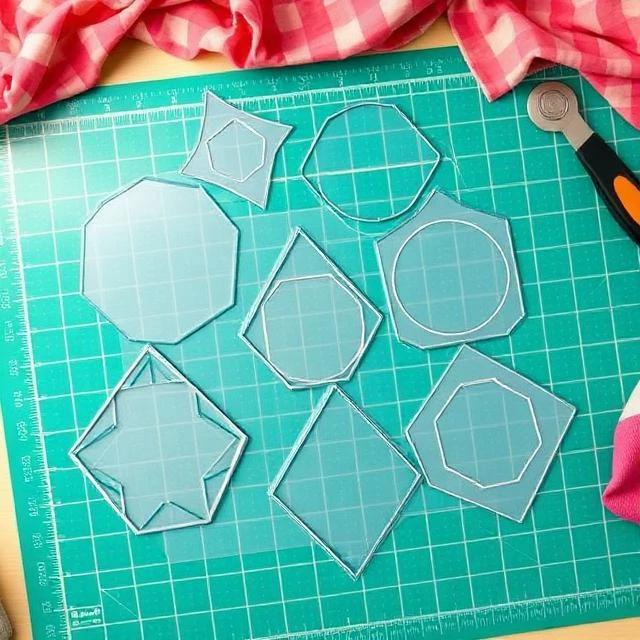
A template is a shaped guide used to cut or form repeated designs. It ensures every piece matches the first one. Templates can be made from paper, cardboard, plastic, or thin plywood. Quilters use acrylic templates with marked seam allowances. Woodworkers use hardboard templates for routing identical parts. Sewers use paper templates for pattern pieces. The material depends on how many times the template will be used. A one-off paper template works for a single cut. A production run needs something durable.
Making a template starts with a drawing or an existing shape. Trace it, cut it out, and test the fit. Adjust the edges until the shape is exactly right. Then transfer the template to your material. For routing, the template is clamped to the workpiece and the router follows it with a flush-trim or pattern bit. For sewing, the template is traced onto fabric and cut with scissors or a rotary cutter.
Template materials
- Paper — quick, cheap, best for one or two uses
- Cardstock — sturdier, good for fabric tracing
- Acrylic — transparent, durable, ideal for quilting
- Hardboard or MDF — for routing and woodworking jigs
Label your templates. A stack of unlabeled shapes becomes useless fast. Write the project name, size, and grainline direction on every piece.
Comments
No comments yet. Be the first to share a thought.
Leave a comment