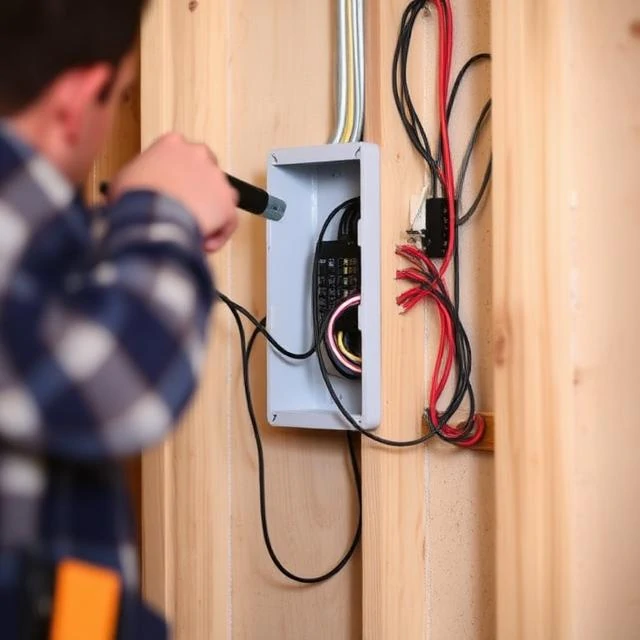
Wiring distributes electricity in a building. It is the network of conductors that carries power from the service panel to the outlets, switches, lights, and appliances. Wiring is hidden inside walls and ceilings. It is also the nervous system of the building. Without it, the lights do not turn on, the outlets do not work, and the appliances do not run. Wiring is installed by electricians. It is regulated by the electrical code. It must be sized, protected, and grounded correctly.
Wiring comes in several types. Non-metallic sheathed cable, or Romex, is used in residential walls. Armored cable, or BX, is used in commercial buildings and exposed locations. Conduit is used in industrial and outdoor installations. The wire size is measured in American Wire Gauge. A 14-gauge wire carries 15 amps. A 12-gauge wire carries 20 amps. A 10-gauge wire carries 30 amps. The wire must match the breaker. A 15-amp breaker protects 14-gauge wire. A 20-amp breaker protects 12-gauge wire. If the breaker is too large, the wire can overheat and cause a fire.
Wiring must be grounded. The ground wire provides a safe path for fault current. It is connected to the earth and to the panel. It protects the user from electric shock. Wiring must be protected from damage. It must be stapled at regular intervals. It must be kept away from heat and water. It must be installed in boxes at every junction. The connections must be tight and secure. A loose connection can arc and start a fire. Wiring is not a do-it-yourself project. It is a licensed trade. It is a matter of life and death. The electrician is the guardian of the grid.
Comments
No comments yet. Be the first to share a thought.
Leave a comment