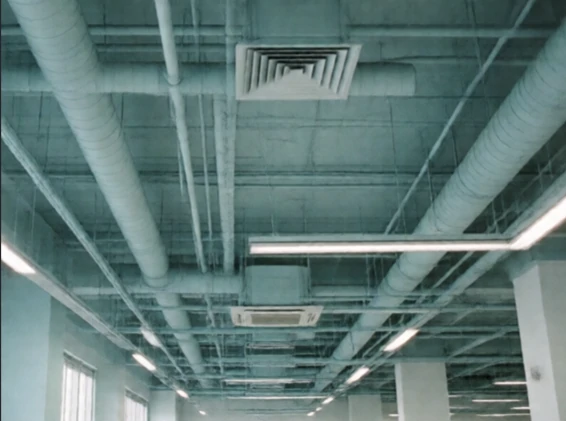
The ceiling is the upper interior surface of a room. It can be as simple as the underside of the floor above, or as elaborate as a suspended system with lighting, diffusers, and acoustic panels. Its main job is to close the room, but it also affects light, sound, and thermal comfort.
Ceiling height matters. Low ceilings feel intimate but can feel oppressive. High ceilings feel grand but can be hard to heat and cool. In offices, a common strategy is to expose the structure — ducts, pipes, and beams — and treat the ceiling as a design feature rather than hiding it.
Suspended ceilings, also called drop ceilings, hang from the structure above on wires. They create a plenum for mechanical and electrical services. The tiles are easy to replace and can be specified for acoustics, fire resistance, or moisture resistance.
Specialty ceilings include coffered, vaulted, tray, and stretch fabric. Each has its own visual and acoustic character. The choice often comes down to budget, maintenance, and the feeling you want the room to have.
Comments
No comments yet. Be the first to share a thought.
Leave a comment